
A friend asked me about the “future of supply side economics.” The connotation, I think, was that after fifty years now, since the early days of the 1970s, we have done what could be done. Low Taxes and Stable Money.
Rather, I see economics today — not just “supply side economics” but the entire field of study — as basically an unexplored continent. This is because, of the thousands of professional academic and other economists out there, almost none are doing anything to explore this vast continent. They are just bickering about the same stuff they’ve been bickering about for the past 100 years, most of it irrelevant.
The great insight of the “supply side economists,” which as we know are really just “economists” in the Classical Tradition, was basically that everything matters. We have always known this, of course. AI, or regulations on car emissions, or regulations on bank lending, or immigration, or self-driving cars — all this matters. But, some things matter more than others. So you focus your attention, first and foremost, on the things that matter most, which is usually Low Taxes and Stable Money. But, you can also focus some attention on all the other things that matter. Today, I might say that Immigration matters more than taxes and money.
August 11, 2016: The Gigantic Importance of Supply-Side Economics
There are some economists who do focus on some narrow topic, like fisheries management or rent controls or the effects of minimum wage laws. But, the big macroeconomists ignore all of this, because it doesn’t fit into their mathematical models. One outcome of the misuse of math in economics, since the 1870s, is that it implies that nothing matters, unless it is represented by a letter variable. The very use of the equal sign, by definition means that nothing else matters. a+b=c. You don’t have to go beyond the a and the b, and in fact you can’t, because there’s no room for it. The equal sign itself means that you need nothing else to get to c. It is terrible delusion, and it shows just how mediocre most economists are that they are still doing it. As I’ve said, all the smart guys went into engineering and private equity.
This new Classical, or supply-side, economist reintroduces history and real-world situations. We move away from the Austrian impulse toward abstractions supposedly true at all times and places, again an implication from the use of “scientific” tropes in economics. Just as the physics of electromagnetism are true in all times and places, so too economists were drawn to similar sorts of arguments. The result is that there is little good economic history of anything. For example, in the Russia Today chapter that I added to the Russian-language version of Gold: The Once and Future Money, I did a little study of the amazing things that were going on in the FSU area in 2000-2010.
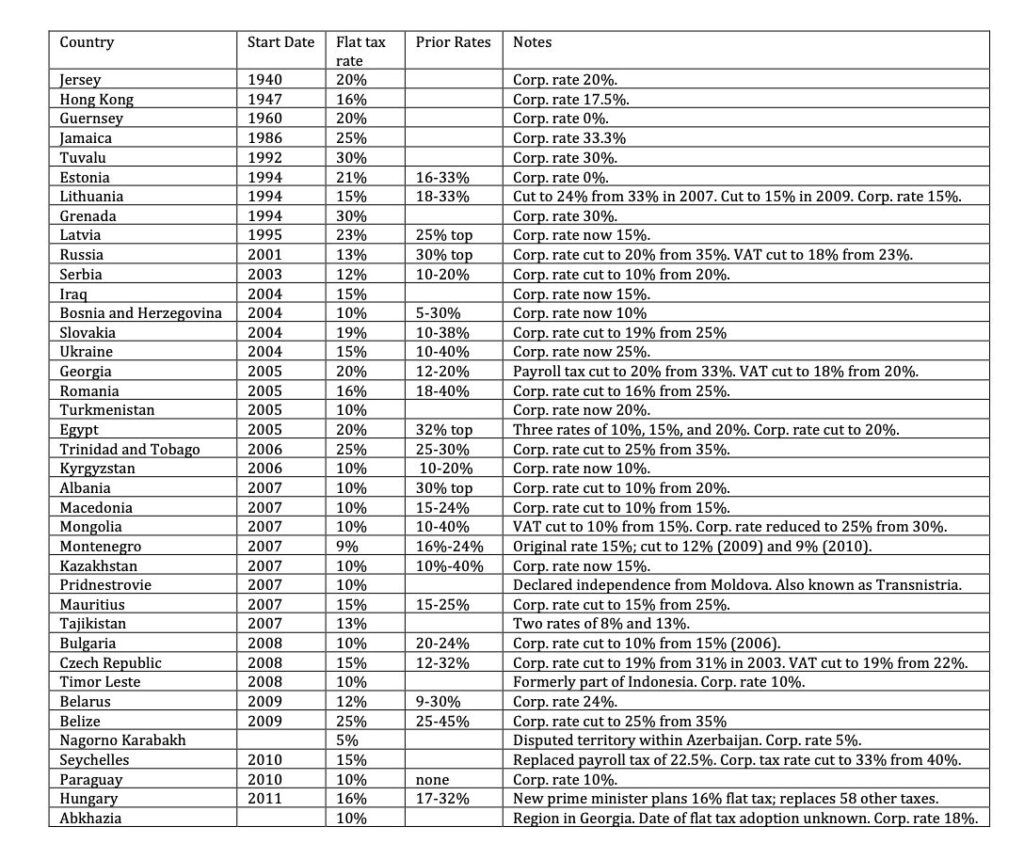
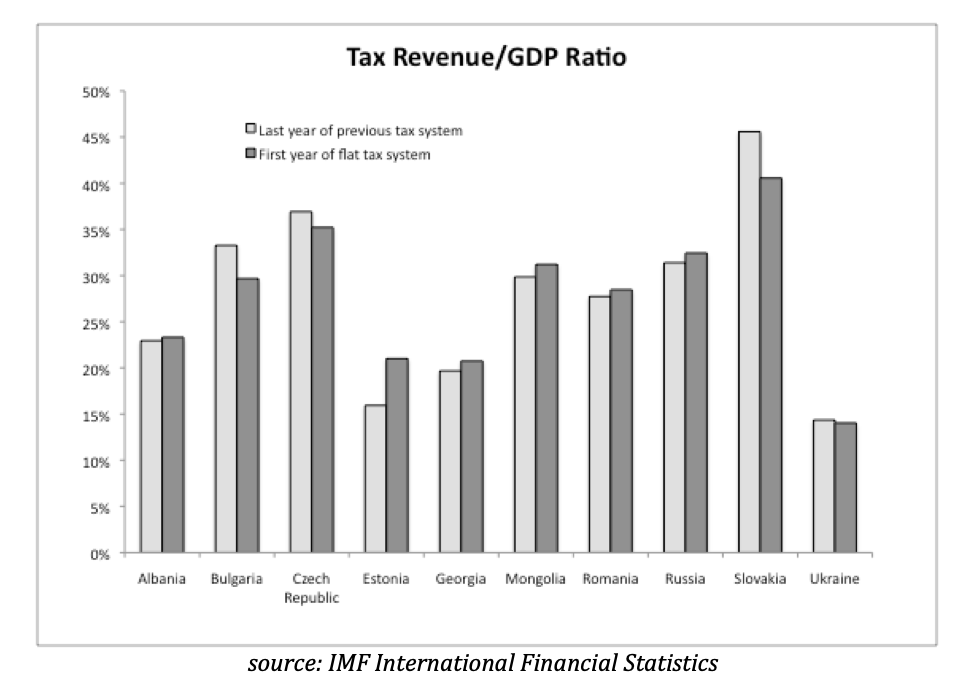
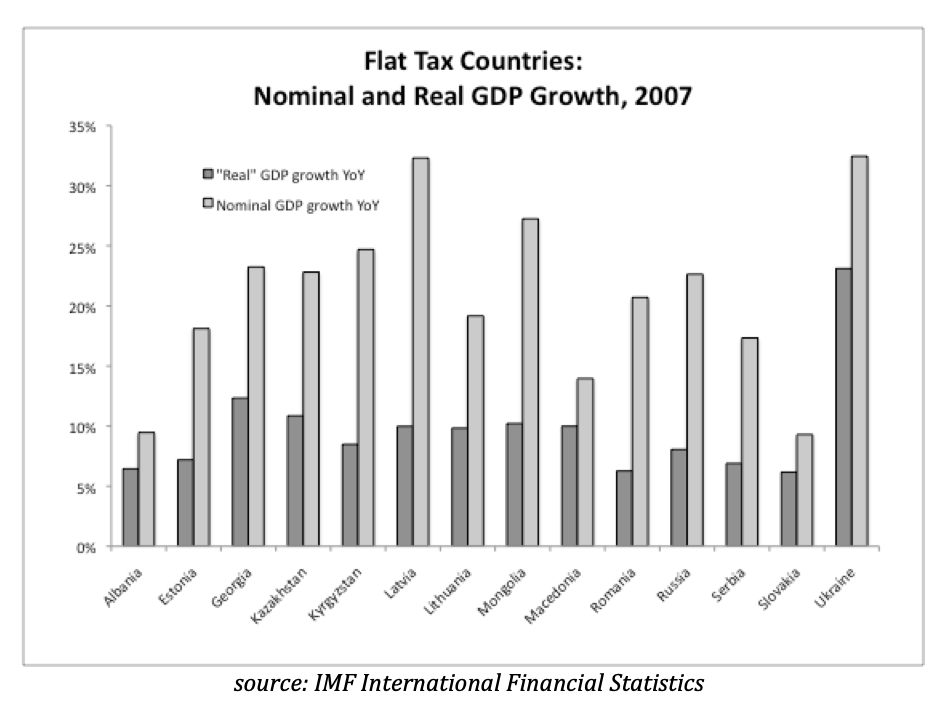
Pretty interesting, don’t you think?
But, besides this little effort of mine, I know of nobody who has done any kind of detailed study into what was going on in those countries, during that time. Admittedly, I haven’t looked very hard. But, you would think I would have heard about it.
Do you see what I mean by an “unexplored continent”?
Personally, I would like to do an extended study of the Great Depression sometime, because I think that period has hardly been explored in the kind of detail that I would want to know — the simplest and most important things. For example, I wanted to know what British tax policy was in the 1920s and 1930s. We’re talking about Britain here, not Ethiopia. So, I found a British professor, who wrote a whole book just about tax policy in Britain: Martin Daunton, who wrote Just Taxes: the Politics of Taxation in Britain, 1914-1979. It was the best book I could find on the topic, using the resources of the Colgate University Library.
But, the book didn’t tell me what I wanted to know — for example, the income tax rates. Yes, the tax rates. So I talked to Martin Daunton directly — “Martin, I love your book, it has a lot of interesting stuff, but I just want to know what the taxes were, and their rates.” He told me: “Me too, if you find out let me know.”
Unexplored continent.
Much the same was the case for France and Germany. Couldn’t find actual tax changes.
This is just the most rudimentary stuff. There are a lot of other things I would like to know about what was really going on during the Great Depression period. And, after nearly a hundred years, and hundreds of books written on the topic, I still haven’t found one that tells me the answers that I would personally want to know, to make an informed guess about what was really going on at that time.
For example, FDR had the horrible National Industrial Recovery Act of 1933, a disastrous set of regulations (but not inherently taxes or money), which Amity Shlaes described in some detail in The Forgotten Man. The Supreme Court threw it out, and the economy recovered. Maybe markets looked forward, and saw more of Roosevelt’s New Deal being thrown out by the Supreme Court. Then Roosevelt almost threw out the Supreme Court, in 1937 — which mean that hopes for a further rollback of New Deal stuff disappeared, and the path was open for Roosevelt to impose more NIRA-type stuff without restraint. Maybe the downturn in 1937 was related to this. The point is, important things were happening that weren’t Taxes or Money, and also not “aggregate demand” or “MV=PT” or whatever crap economists talk about. Probably, similarly important things were happening in other countries too, which I talked about a little in The Magic Formula, for example the rise of the Popular Front in France in 1936, probably with a stolen election.
This is important today, because much of today’s economic stupidity (“Keynesianism,” including its Monetarist variant) has its roots in the Great Depression. So, if you could tell a real story of what was going on, I think it would, among other things, show how dumb this stuff really is.
Like I said, I haven’t looked very hard. So, one thing that could be done, is just to round up some interesting work that other people have done, that helps shed a little light on the Unexplored Continent. Because if I don’t know about it, who knows about it?
In 2015, I established the Vega Institute of Political Economy, a 501(c)3, to serve as a place that can do these things. Mostly it just served as a way for a few insightful patrons to help me finish the books Gold: The Final Standard, and The Magic Formula, which I think came out really well, and serve as an important resource for people who are interested in these topics. I find that, those people who want to know, find my books fairly quickly. And those that don’t want to know, will never know even if you drop the answers in their lap, so let’s forget about them. I admit that the numbers are very few. But, those very few are all we have to work with; and where would they be without a book to tell them the answers? At the very least, a record of what we have accomplished to this date? Perhaps in the future, if someone wants to leave an endowment, we can have a more active effort that includes such things as surveys of what’s out there, to find something useful and important, and also regular conferences and the like where supply-side-minded people can get together. I am sure this is also part of the mission of the Laffer Center at Hillsdale College, so maybe they will pick up the ball and run with it. Mostly it has served as a public archive of Laffer’s own books and public talks, which is a very good start.