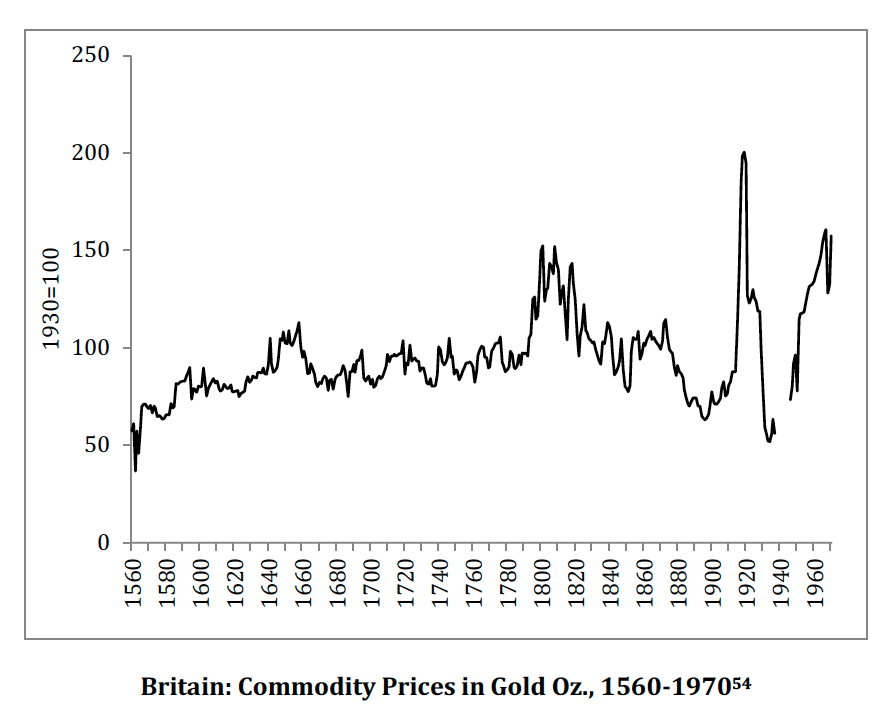
Here is some updated data, from a big dataset at the Bank of England with statistics going back to 1209.
Click for BOE “millennium of macroeconomic data”
This is a “Retail Price Index” (mostly just commodity prices before 1800 I am sure), and a “Consumer Price Index,” from 1209 to 1913.
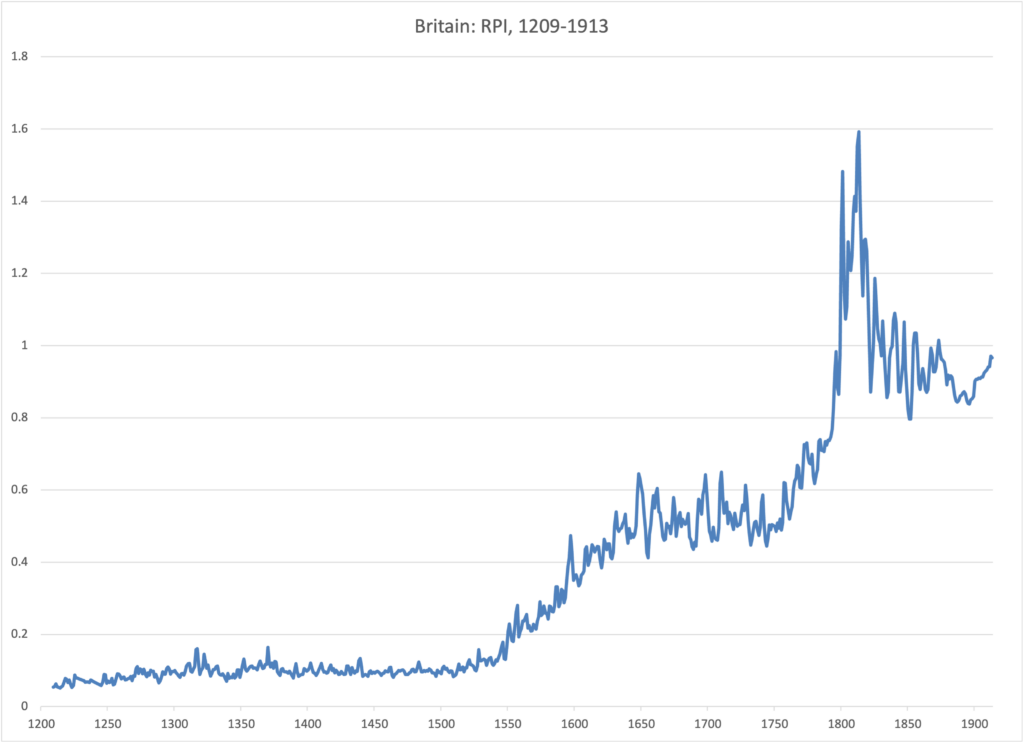
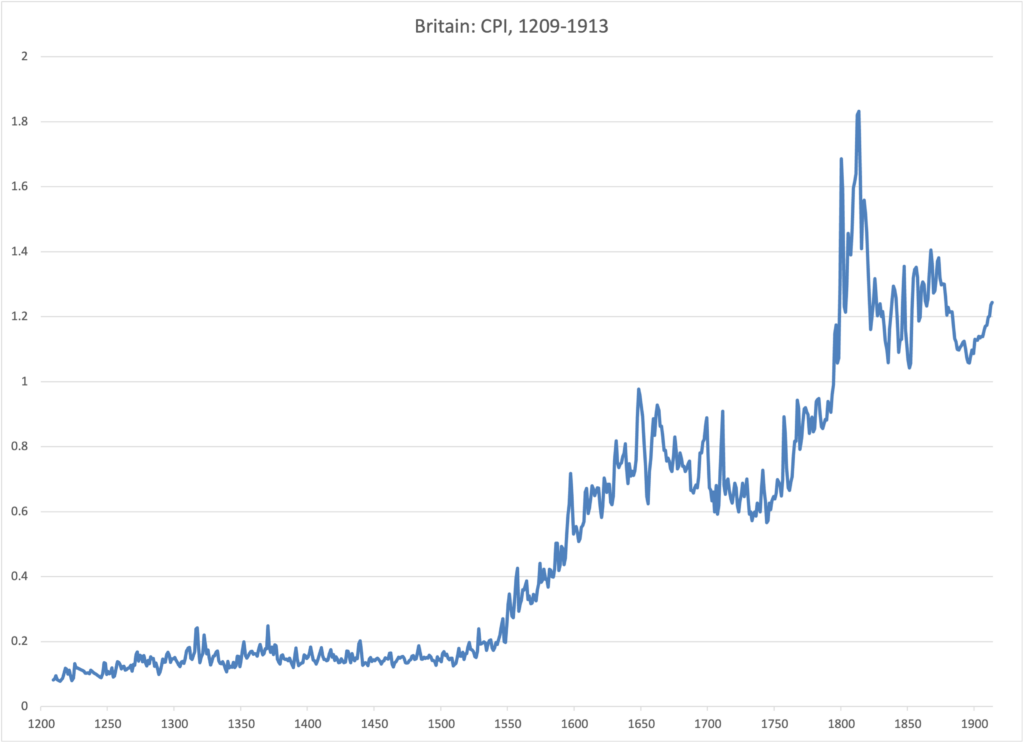
We can compared to the silver value of the British pound during that time.
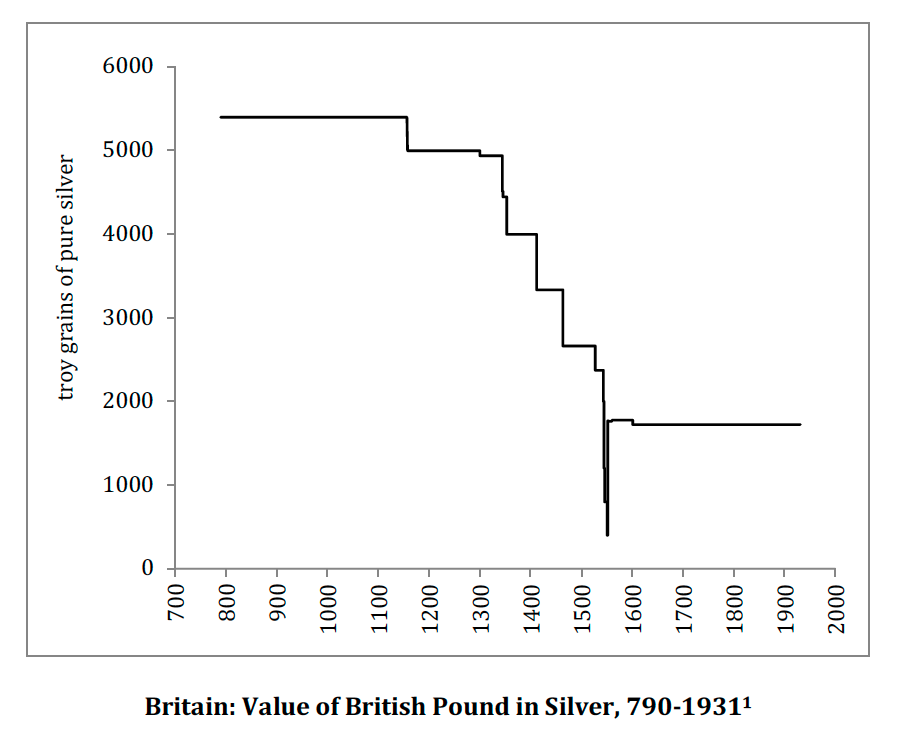
There is a big response to “prices” to the devaluations and debasements of Henry VIII. However, we don’t see the effects of the prior debasements. The dataset might be adjusted for these somehow.
There is also information on the “price of gold” in British pounds from 1257. Using that data as an adjustment, we get an RPI index in gold from 1257 to 1913, which looks like this:
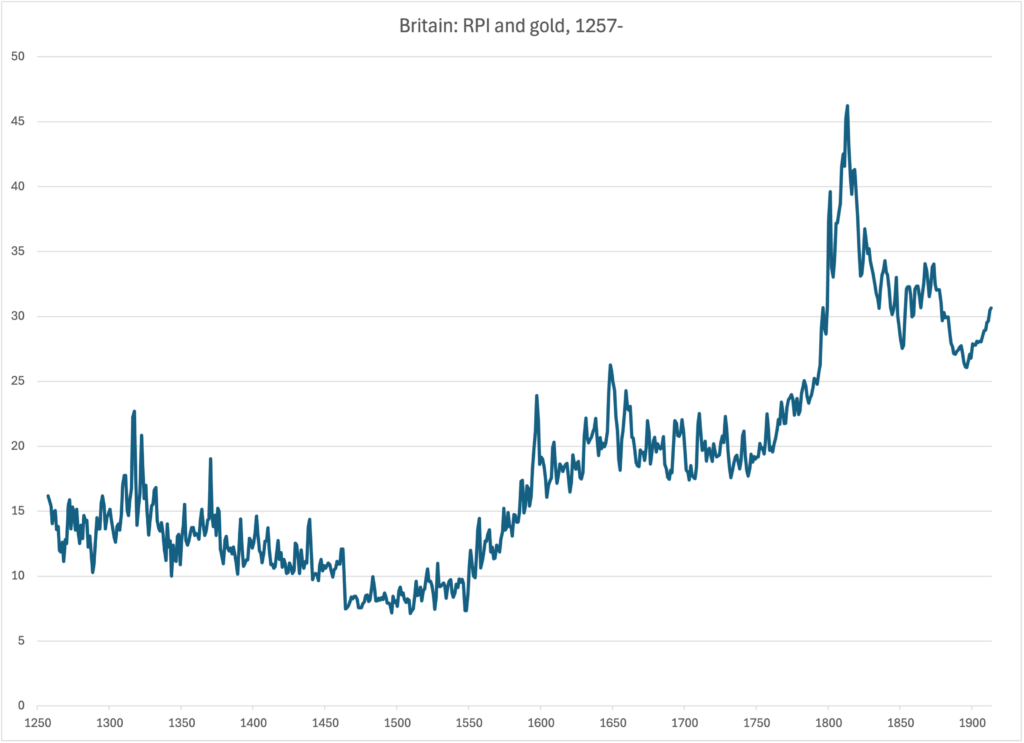
The RPI for the 19th century is somewhat above the 18th. I think this represents an expansion of the “RPI” beyond simple commodity prices after 1800 or so.
The big rise around 1800 is related to the Napoleonic Wars in Europe, which also involved Britain. There is also a smaller rise around 1650, related to the Civil War in Britain.
Our other dataset, from Jastram, also shows this rise in agricultural commodity prices after 1500:
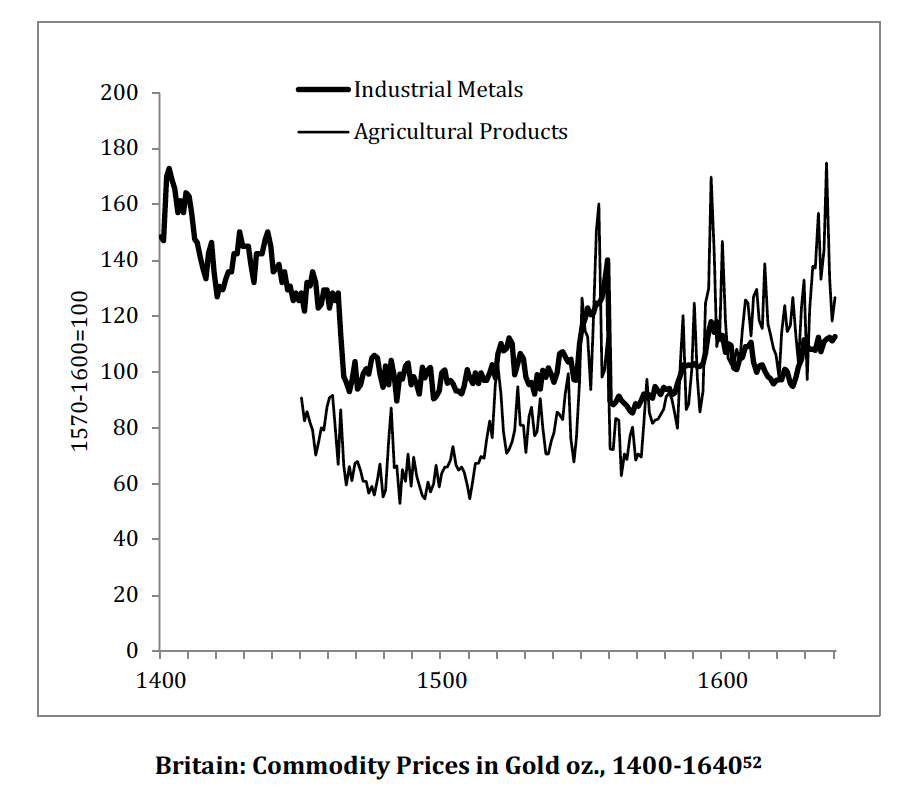
However, there is no such rise in metals prices, making me think that this had something to do with agricultural commodities in Britain (it happens over the course of a century), not the “real value of gold.”
Also we see that the low values around 1500 were actually a decline from the values around 1300. The RPI values around 1700 were higher than the values around 1300 — about 20 on the chart, compared to 15 — but I suggest that +33% over the course of four centuries is maybe not that big a deal.
This dataset, also from Jastram, is for commodities only, not a “retail price index” to which enterprising academics might add additional data (for example rents) as price data became available in the 19th century. We do not see a noticeable rise in the 19th century here, compared to the 18th, excepting the Napoleonic Wars period.