
Wikipedia has updated its information about the history of the French franc, with good numbers back to its founding in 781.
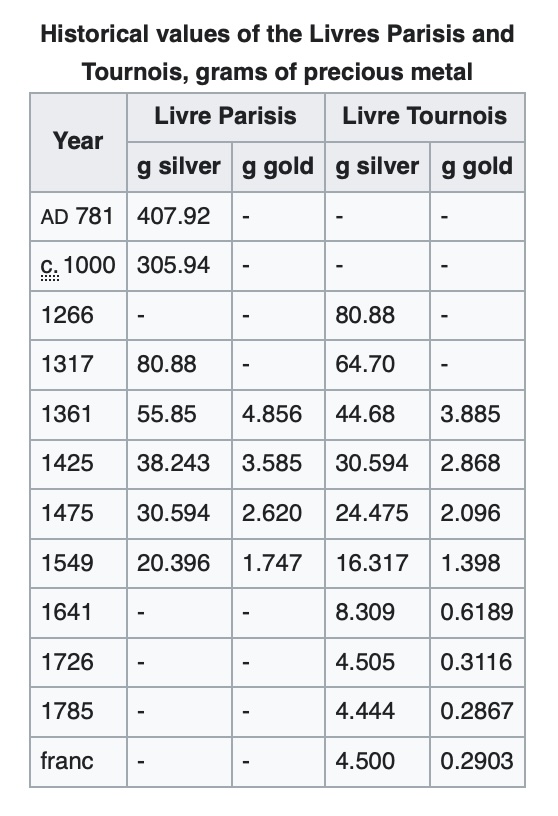
The livre tournois was adopted in 1266. The “franc” dates from 1795 as part of the French Revolution, but it basically had the same value as the pre-Revolution livre. This value of the franc continued until 1914.
And so we see that the silver value of franc declined from 408 grams — just about a pound, from which the name livre is derived — down to 4.5 grams before all the ruckus of the 20th century.
For comparison, here is the British pound, which was based on the livre of France established a few years earlier. Both names are based on the Roman libra, or pound.
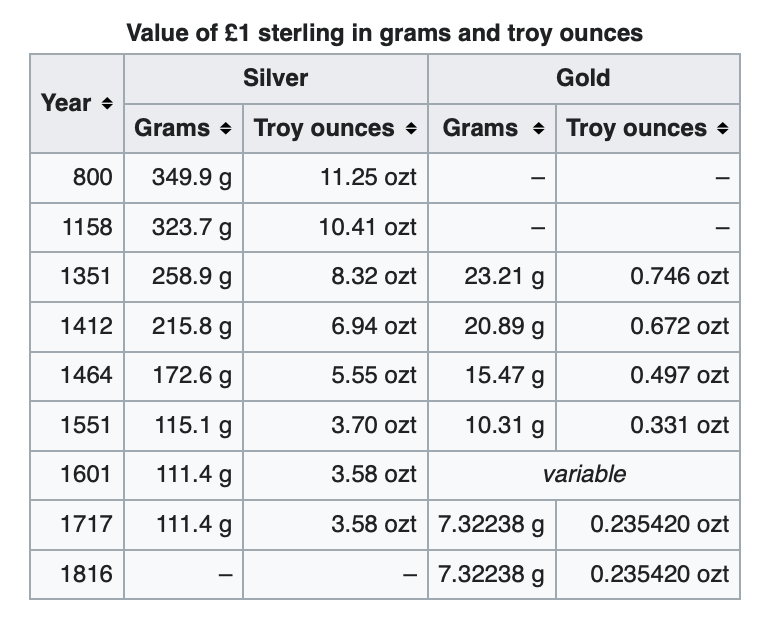
So we see that the original British pound had about 350 grams of silver, compared to 409 grams in France.
The original Roman coinage was the as, made of bronze (alloy of copper and tin). The original as of the third century BC in Rome was … one pound.
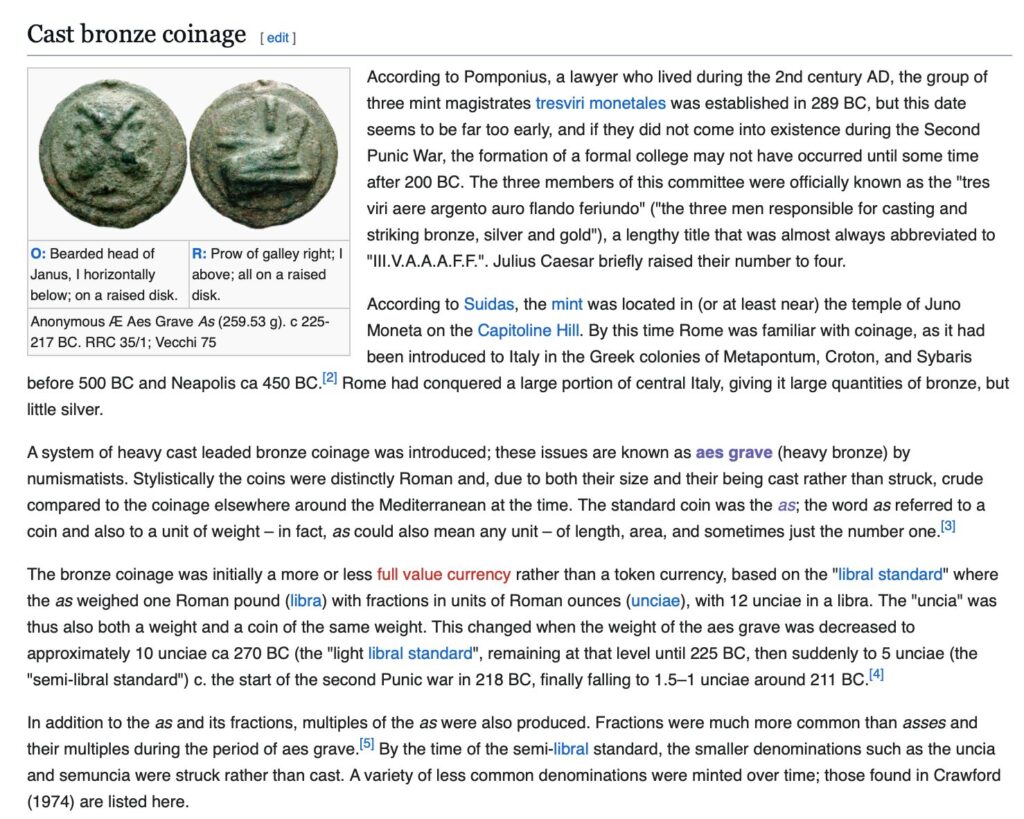
The actual weight of this “pound” was:
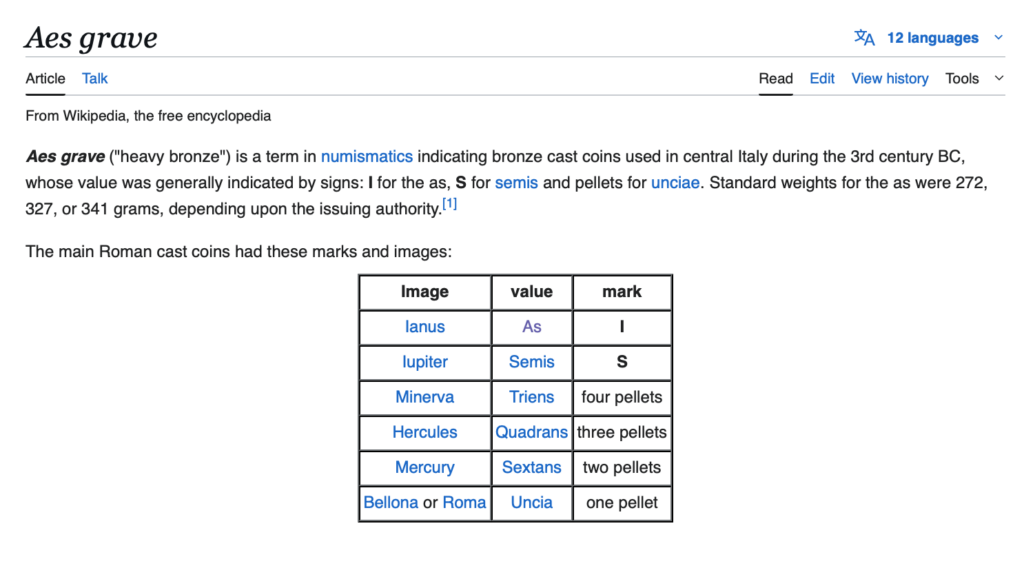
Here are the Roman units of weight, independent of coinage:
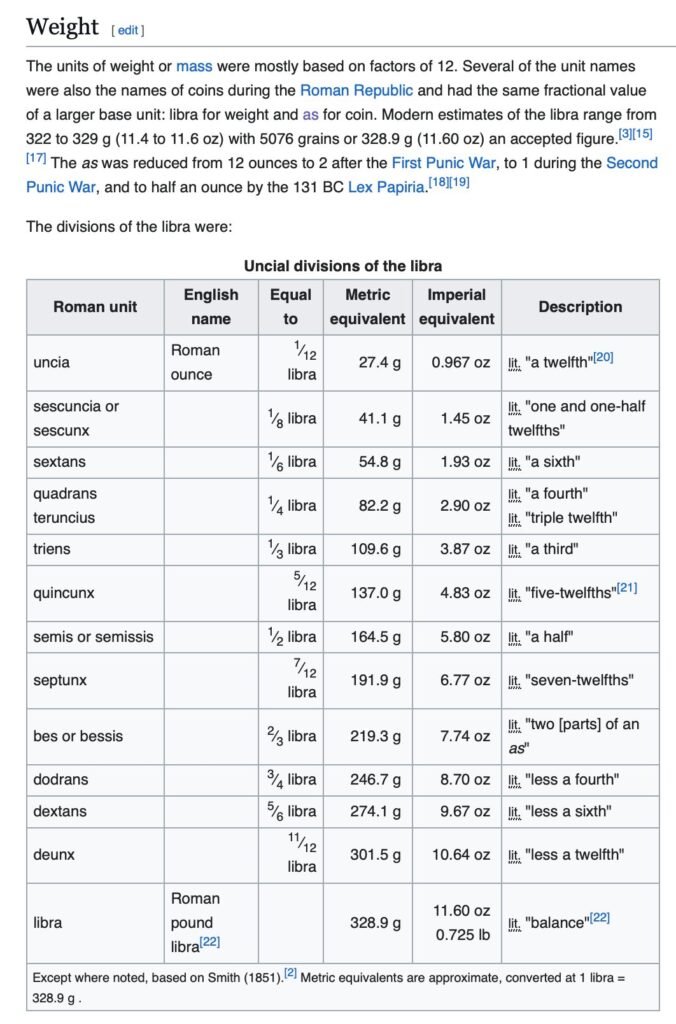
Here the libra was 329 grams.
Here is some information on the “pound” since then.
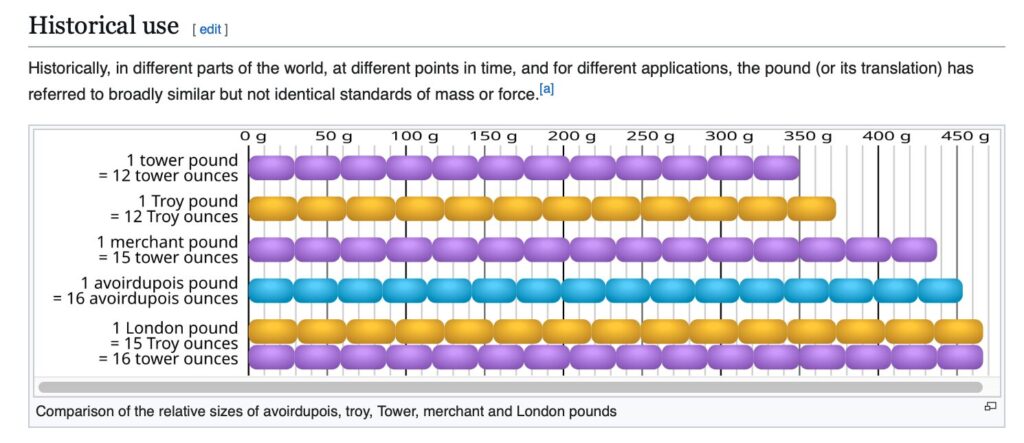
Thus the British pound of 800AD was based on the Tower pound, which was quite close to the original Roman libra, and had 12 ounces. Today’s avoirdupois pound and London pound are based on 16 ounces.
These “libra” and “pounds” of various sorts are themselves based on the mina, a measure from ancient Mesopotamia.
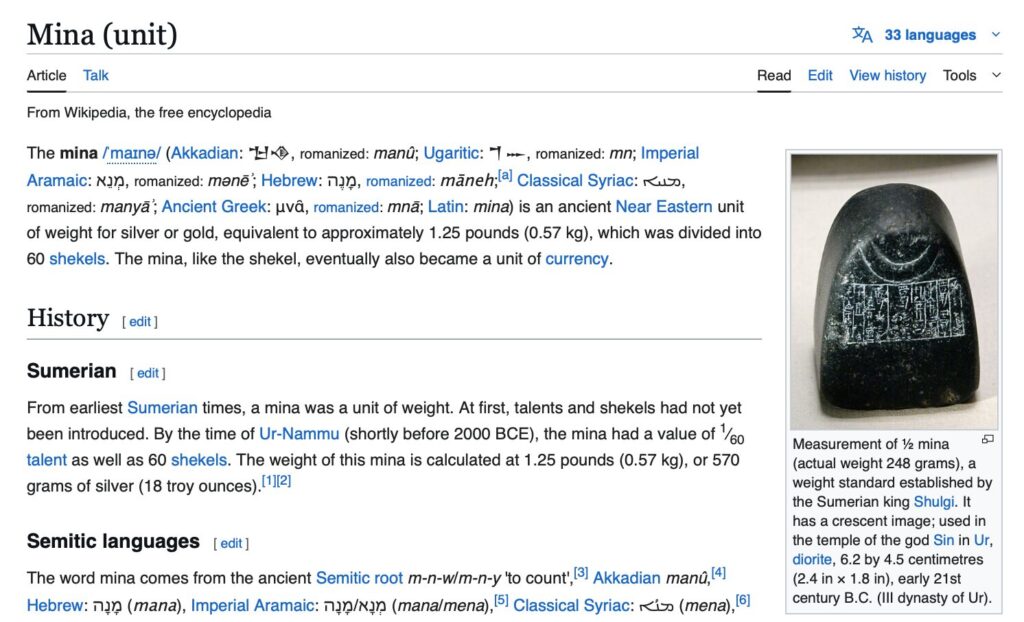
This mina was about 500 grams. Here we see an early mina of 570 grams, and also a standardized measure of 2x 248g or 496 grams. These “mina” also became a standardized weight of silver for use in commerce, and thus became a currency. The mina was later subdivided into 60 shekels, while 60 mina made a talent.
Note that this standardized weight comes from the Third Dynasty of Ur, a prosperous time. The Temple at Ur, at this time, served as an early banking house.

This Temple of Ur still exists today, now partially reconstructed.
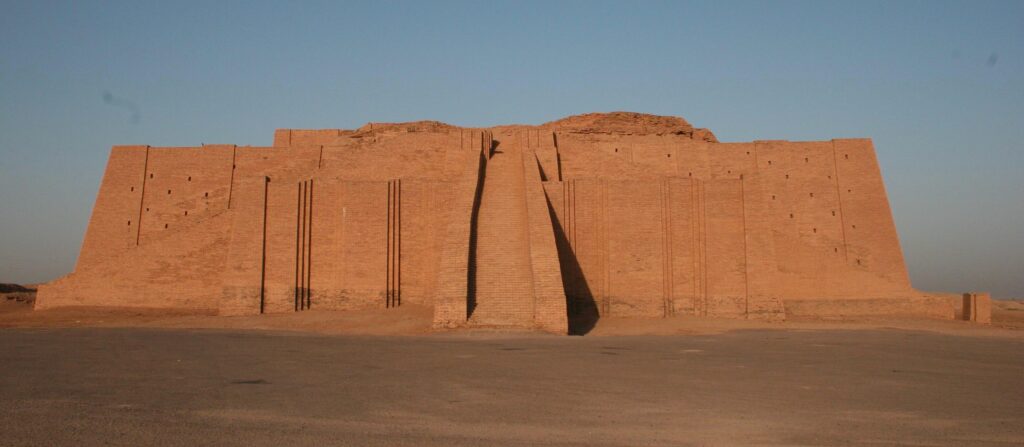
Here is a rendition of what it might have looked like in the late 3rd millennium BC — when it was making transactions of silver measured in mina, or “pounds.”