
Alicia, the Courtyard Urbanist, has picked up the football and run with it.
Traditional City/Post-Heroic Materialism Archive.
The Courtyard form is quite common throughout Europe, but it is almost nonexistent in the United States — at least traditionally, the 19th Century Hypertrophic City (American Edition). Actually, the courtyard form has become more common in recent years, not as a kind of Traditionalism, but really as a kind of modern practicality. Or, Reinventing the Wheel. It’s called the Texas Doughnut.
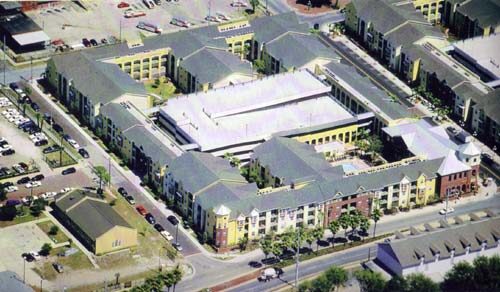
The Doughnut typically includes parking of some sort, since if you live in Texas you aren’t going to be walking anywhere. But, it usually also includes some very nice courtyards. Here are some examples from Dallas, TX:
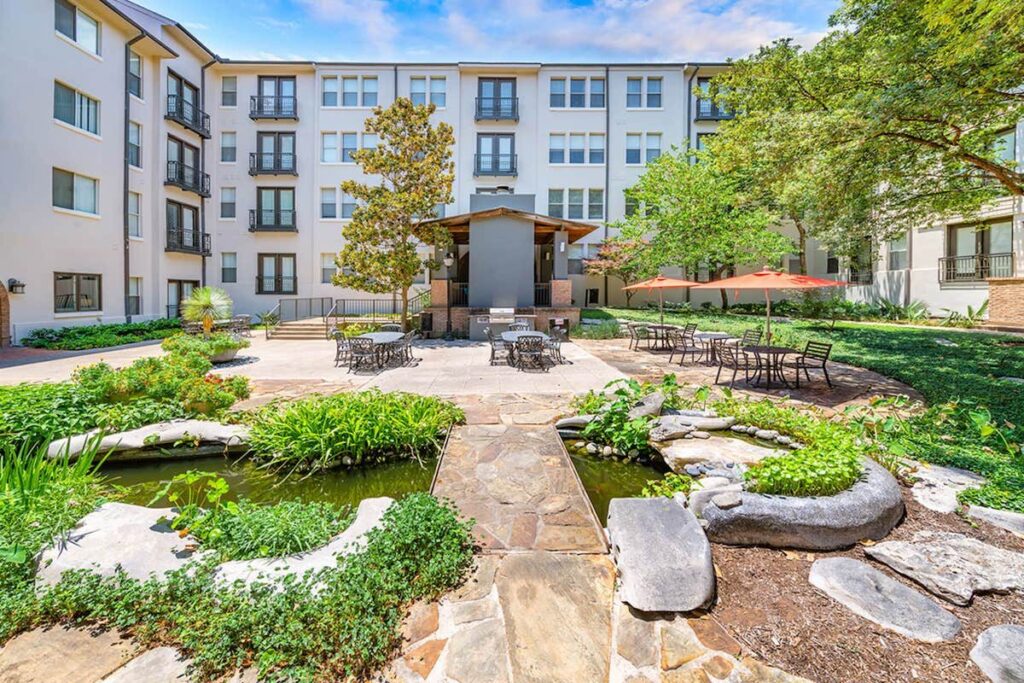
This particular example is very nice, and although I might quibble about minor points the overall effect is very successful. If there’s one thing that could be improved, I think it is the surrounding buildings at the ground floor, which are rather bleak. The upper floors, above the ground floor, are good enough.
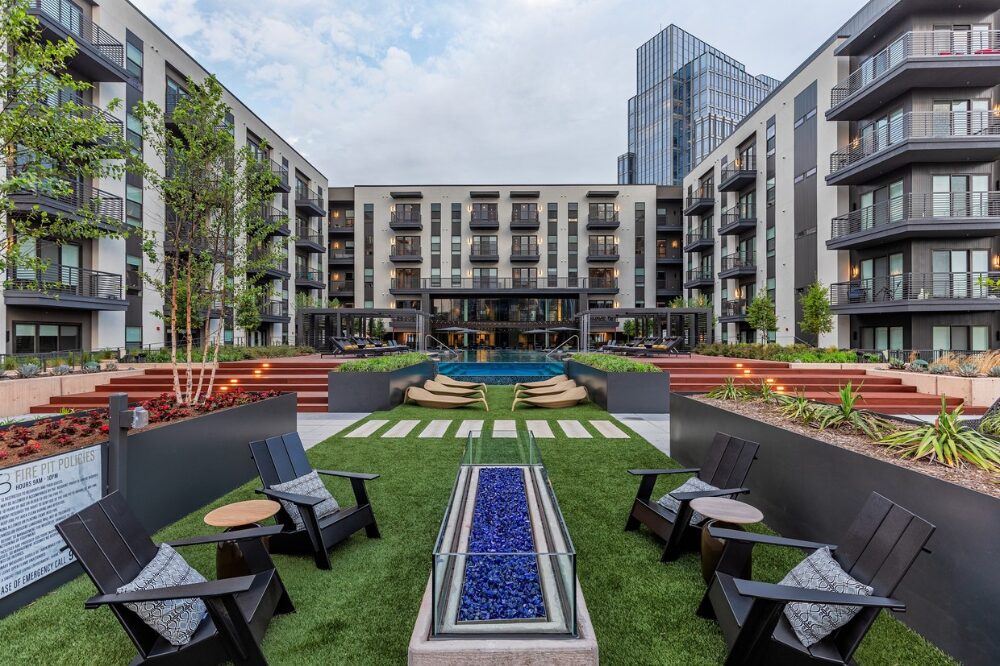
This example — which is real by the way, and is in Fort Worth, TX — is only a little different, but has a more pleasant ground floor.
One of the nice things about this is: you don’t really have to change everything. You can just make a nice building with a courtyard, or a combination of buildings (there can be more than one building surrounding a courtyard), without regard for whatever lies beyond the property line.
There are a lot of things to like about the Courtyard form, which is why it has been common for centuries around the world. Also, the lack of Courtyard options in the US, let’s say around the 1920s-1940s period, probably was a major impetus behind the push toward automobile Suburbia especially in the 1950s and later. People living in cities lacked courtyards. Also, they lacked parks that were nearby enough that they could serve the function of courtyards (something close enough to be a part of daily life). The very large roadways of 19th Century Hypertrophism soon became filled with automobiles, which meant that outside your door was the terrible roar of traffic, and also it was no place for small children.
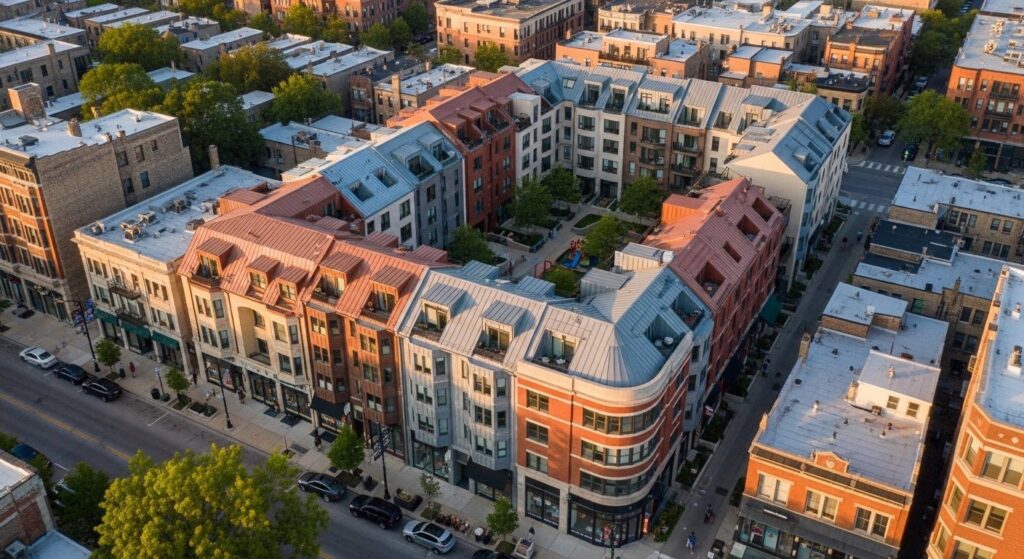
With the help of AI, Alicia the Courtyard Urbanist has been able to make many fantasy examples of very nice courtyard communities:
With this comes a very pleasant vision of what it could be like to raise children in a courtyard apartment:
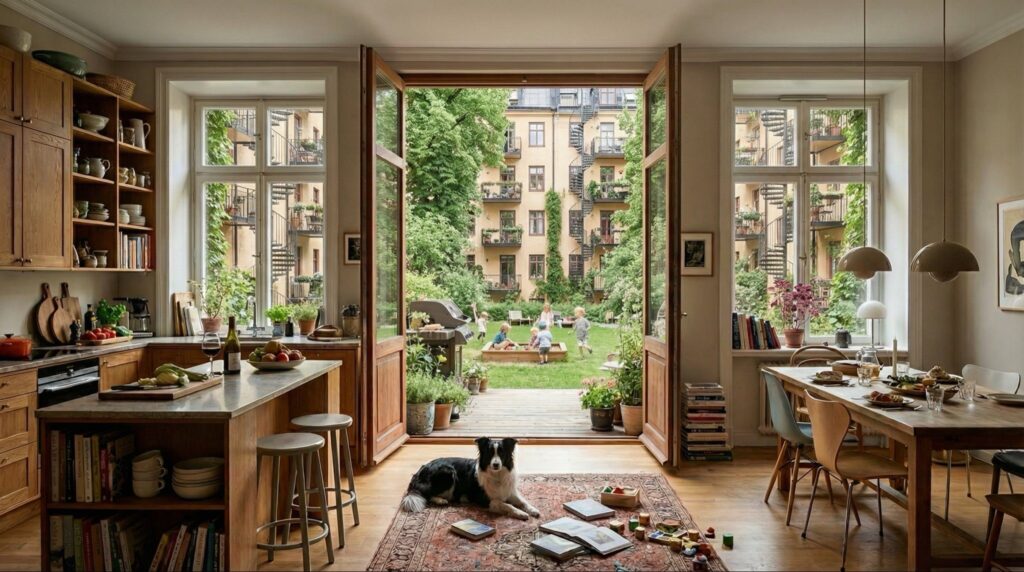
Actually, the ground floor tends to be less desirable, because you don’t really want people looking into your house all day. Nevertheless, it emphasizes the child-friendliness of the arrangement.
There are also some practical reasons for Courtyard Urbanism. One is that it is a lot cheaper — you don’t have to own a lot of land to have your own private yard. Higher FAR/higher density reduces effective land costs. Also, the apartments can be quite small if you like. You can have a 500sf two-bedroom apartment. That would be compact, but also affordable. The logic of Automobile Suburbia is such that, once you are committed to that 5000sf of land, which costs a lot if it is anywhere tolerably near any major urban area, it makes sense to also build a pretty big house of at least 1500sf. Now the price of admission is $665,000 — the average (!) price of a newbuilt single-family suburban home in 2024 — and you still live a lot further away than you would like.
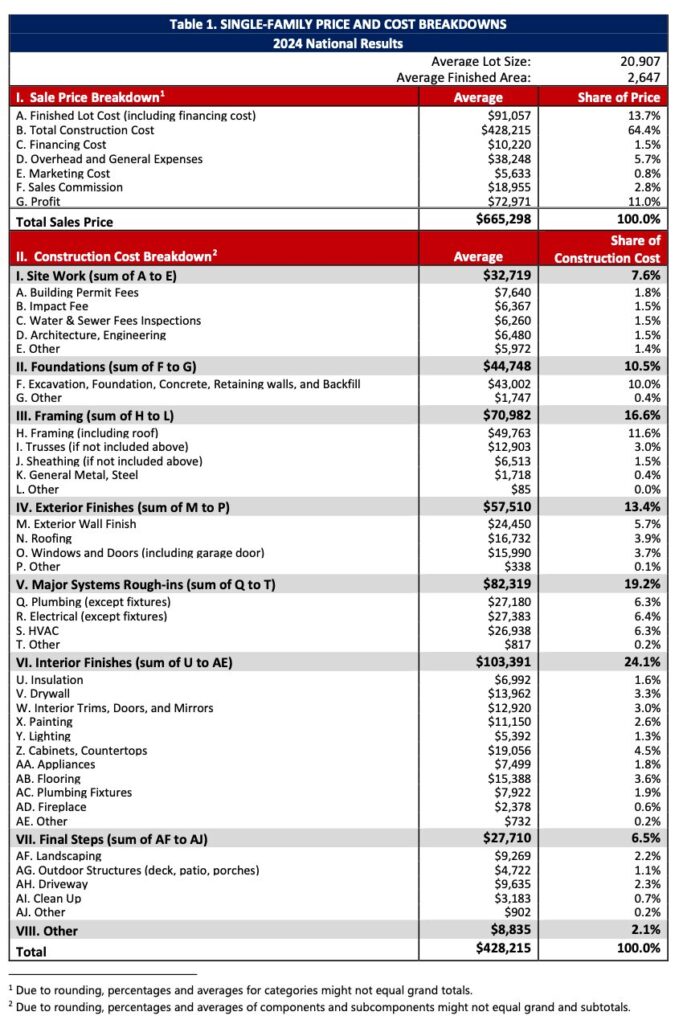
We see here that the average (!) construction cost was $428,215, for an average size of 2,647sf, or $162 per square foot. We also see that the final sale price is 155% of the construction cost ($665,000/$428,000). The construction quality of homes these days is pretty crap, so let’s raise that to $200/sf just so we have a building that is not junk. (This would drive the construction cost of the SFDR to $529,000, adding $101,000.) So, your 500sf apartment, of four-story wood construction, would come in around $100,000 of construction cost, or about $150,000-$175,000 all-in retail price. That is something people can afford.
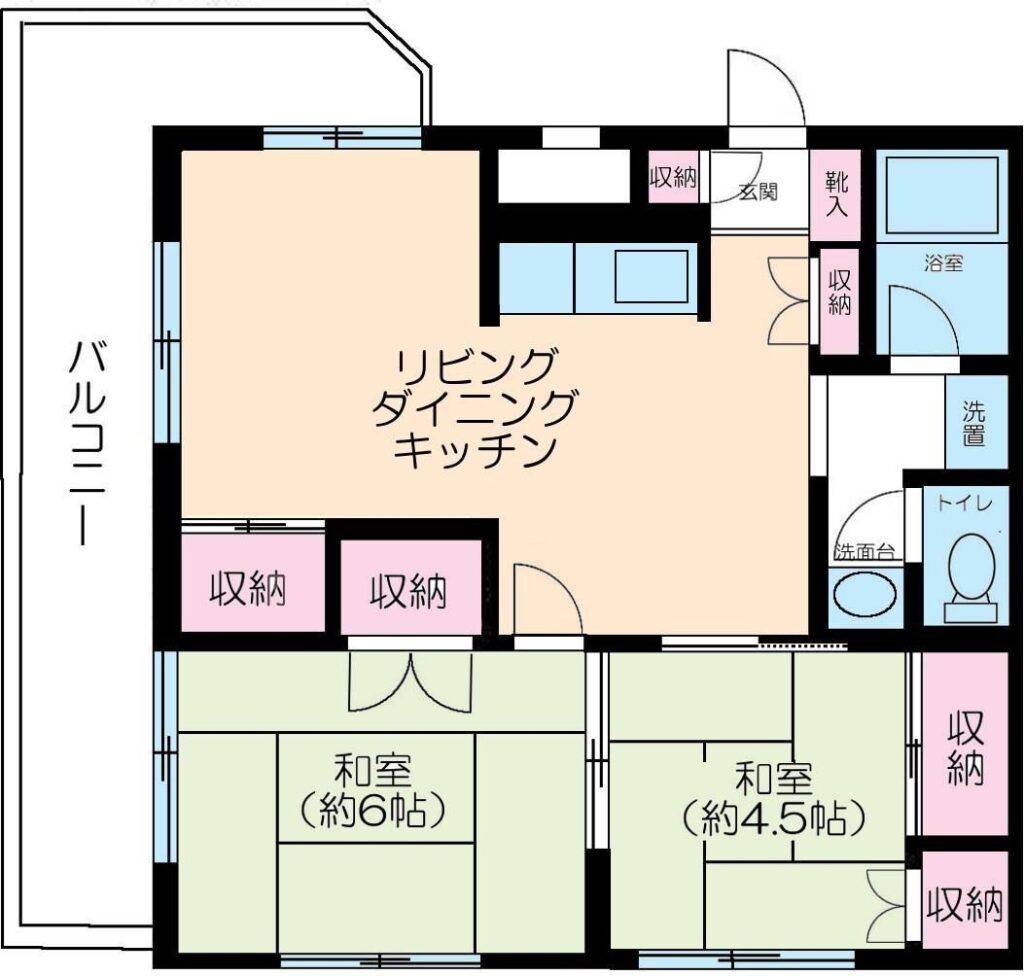
Here is a typical two-bedroom apartment in Japan, which is generally around 500-800sf. You might think that it would be a terrible struggle to raise a family of four or five in such a space. But, actually I myself lived in an apartment much like this, in Tokyo, along with my infant sister. (It was smaller than this, a “2DK” not a “2LDK”; in other words, Dining and Kitchen but no Living area.) Of course I don’t remember any of it. But, I can tell you that it is possible, and my parents did it. I also have a friend that raised four children to adulthood in a cabin smaller than this (400sf); and others have done the same in under 200sf.
Plus, having a condo takes a big load off. You don’t have to take care of the courtyard. It is all professionally maintained. You don’t have to take care of the building either, at least the external shell. Roofing, exterior landscaping, siding etc. is all maintained professionally. You can just focus on your interior space. Of course all this takes money — monthly condo fees — but not so much money, compared to the time and money it takes to maintain a 2,600sf single-family home and a yard.
However, I will mention here that you can also not use the Courtyard form, and get a very fine result. We see almost no Courtyards in Japan.
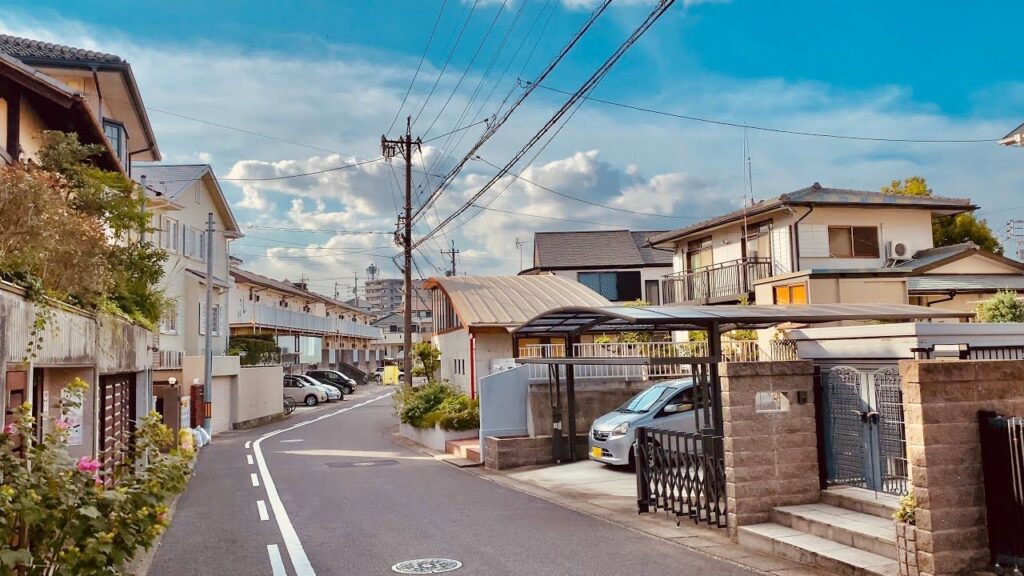
Although apartment buildings have been common in the West since at least the Roman era, there is almost no history of apartments in Japan before the 20th century. Rather, the pattern has been for small (sometimes very small) single-family homes. The result is still very nice. In the modern era, Japanese live in big apartment buildings without yards or courtyards, and that is fine too. The reason for this is basically that the Narrow Street for People common in Japan is pleasant and child-friendly.
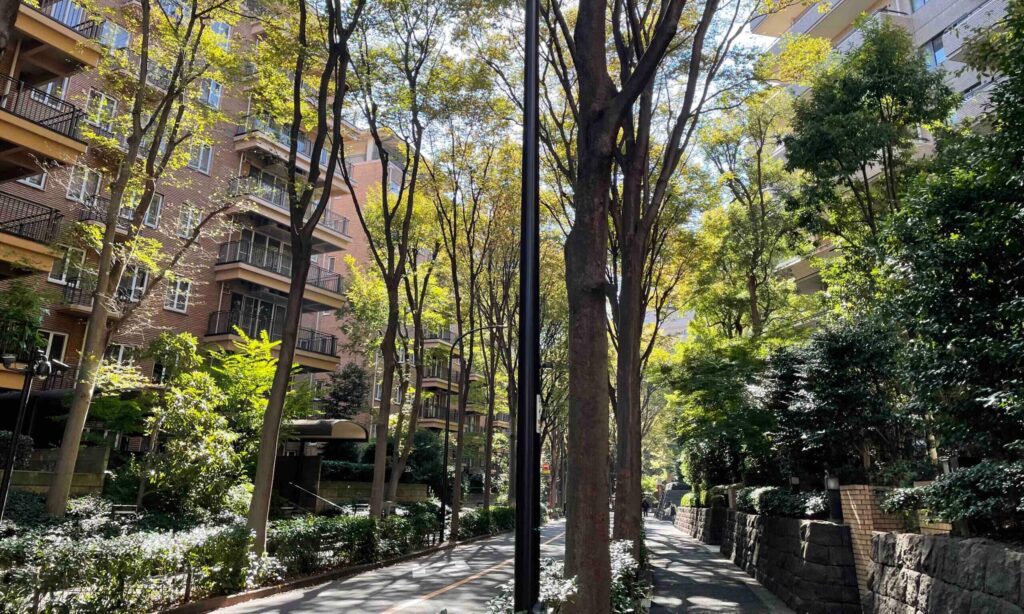
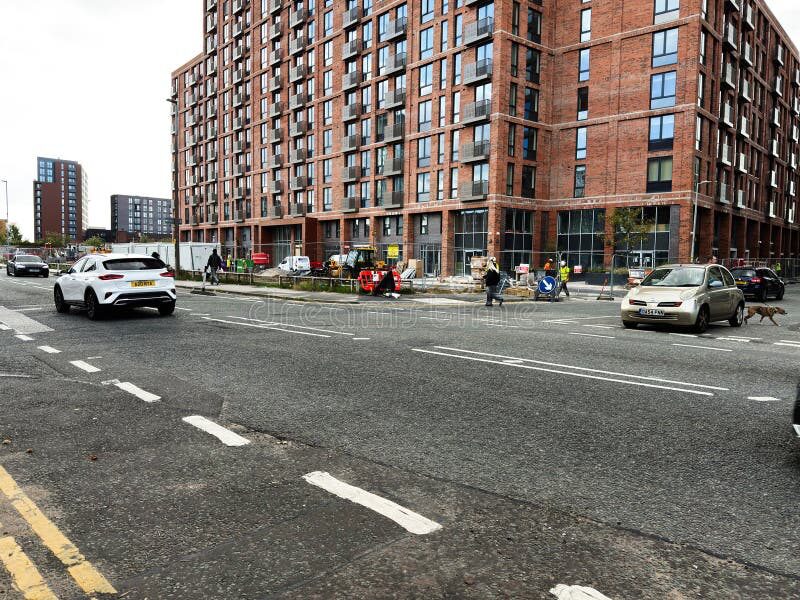
Even when there isn’t much in the way of greenery of any kind, whether courtyards, private yards, or public parks, the Narrow Street for People can be tolerably pleasant, even for children. I like parks and courtyards, but you can live without them IF your public space is a pleasant space For People. Venice:
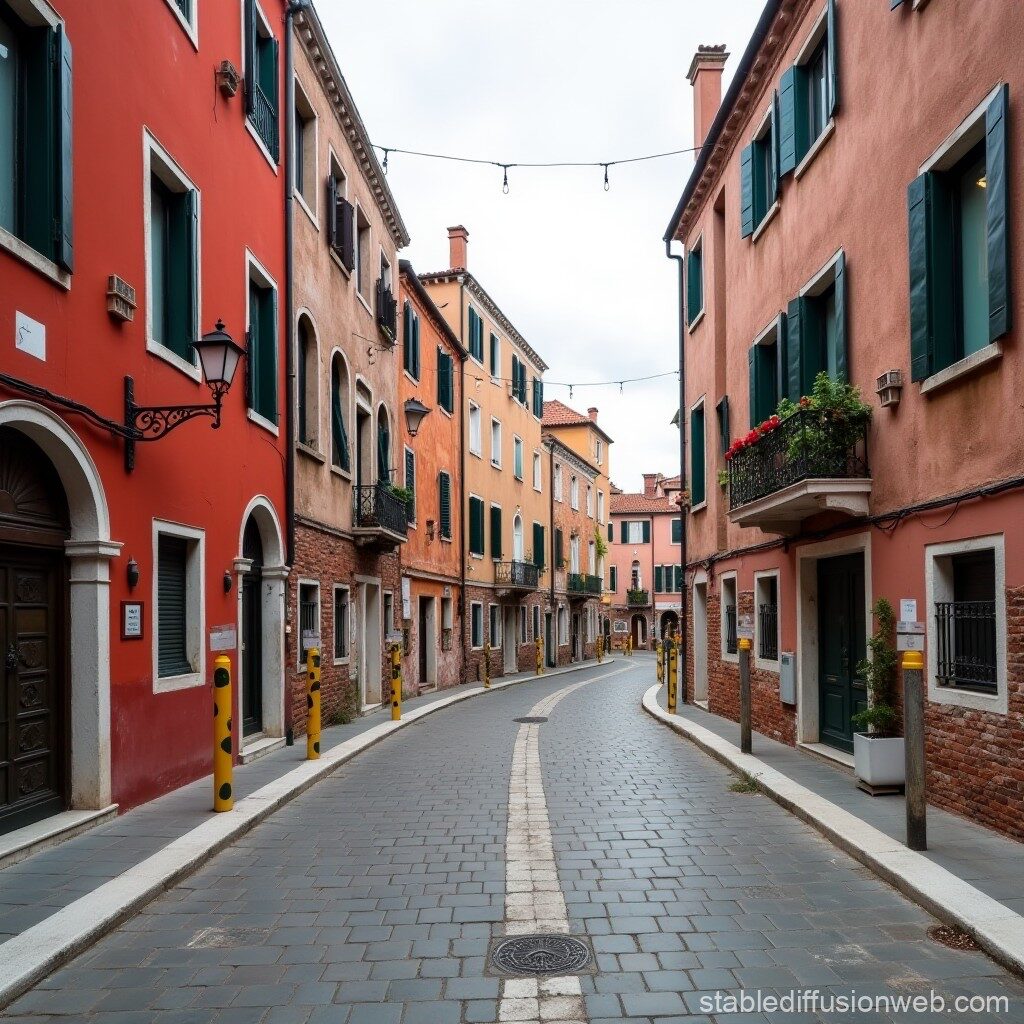
Venice has nearly no park/courtyard space at all, but it is very pleasant. Still, I think it would be even better with some courtyards or public parks, so why not? Even in the densest places in the world, you can fit in a nice courtyard. For example, this is a nice Courtyard. It has a name. The name is Central Park.
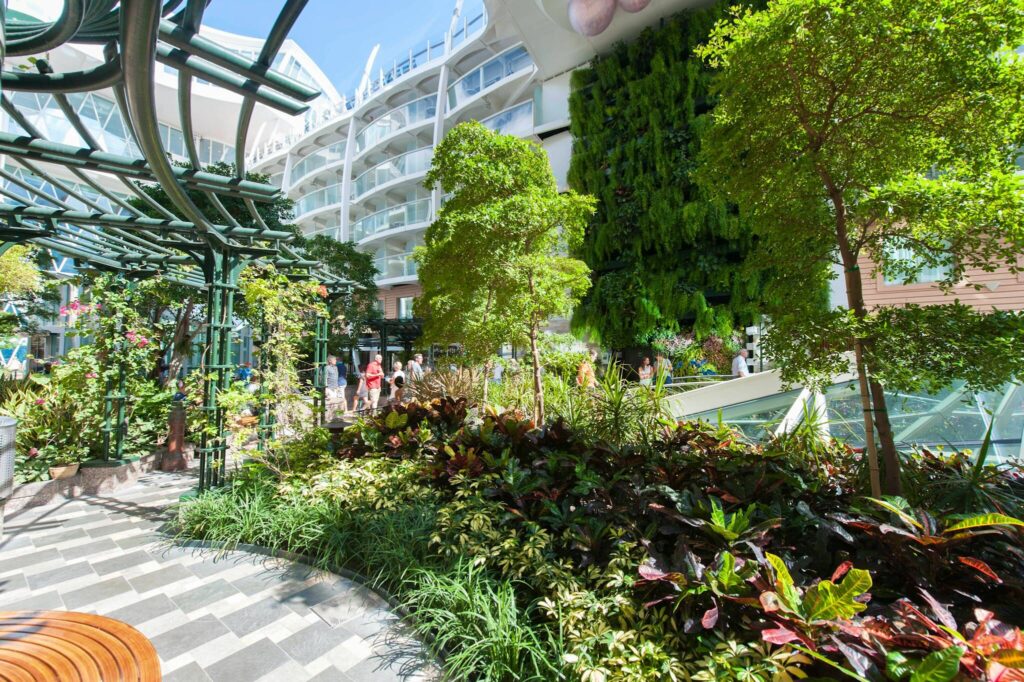
It is found on the Oasis of the Seas, a cruise ship of the Royal Caribbean line. Cruise ships reach effective population densities of over one million “per square mile.” So, there is always space for some kind of courtyard.
On balance, I see the Courtyard form as being much more achievable and practical, in the US, than perhaps the Japanese suburban form of single-family houses and Narrow Streets for People. Nevertheless, the Courtyard fans tend to ignore the importance of the streets that lay outside the Courtyard. This is a good thing, because it is a result of the inherent independence of the Courtyard form. You can get all the advantages, even if whatever lies outside is crap — basically, even in Dallas. But, we can improve this still further, by also putting Narrow Streets for People between the Courtyards, at least most of the time (80%), with some Arterials also (20%) as needed.
This is the common form of Paris and many other very fine cities in Europe:
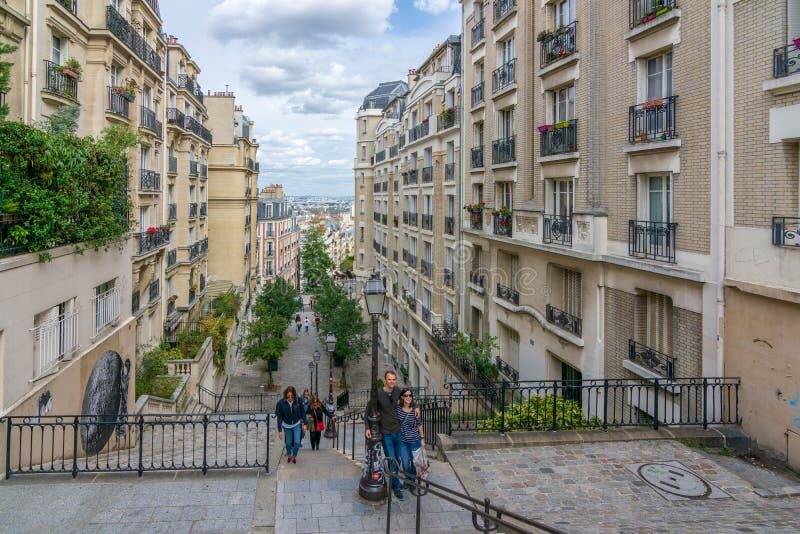
The same area (Montmartre), from above:
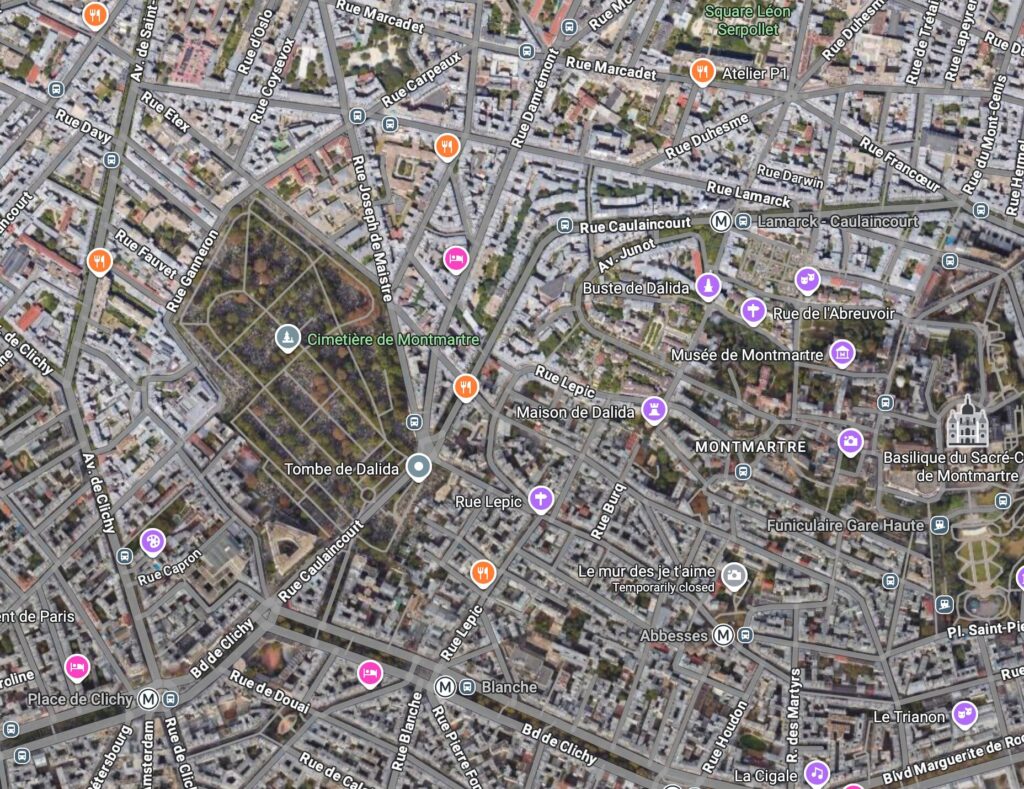
See all the courtyards?
Basically it is the combination of Courtyard Apartments and Narrow Streets for People that makes the best cities so beautiful and livable. Plus, it can be a lot cheaper too. Do one or the other if you must, but do both if you can.