
OK, I admit that it is getting a little too quiet here at Newworldeconomics.com. I have been involved more in government-related issues rather than economic recently, and haven’t posted much about that. So, with many women now going nuts about the Lindsey Clancy business, let’s return to this article in the Atlantic Magazine in 1903.
https://www.theatlantic.com/magazine/archive/1903/09/why-women-do-not-wish-the-suffrage/306616
At that time, Massachusetts was the national hotbed for Feminism and Women’s Suffrage. Early feminism was recollected in Henry James’ 1886 novel The Bostonians, later made into a pretty good movie. Among other things, the novel contains a character who is a practicing woman physician, who is opposed to feminism.
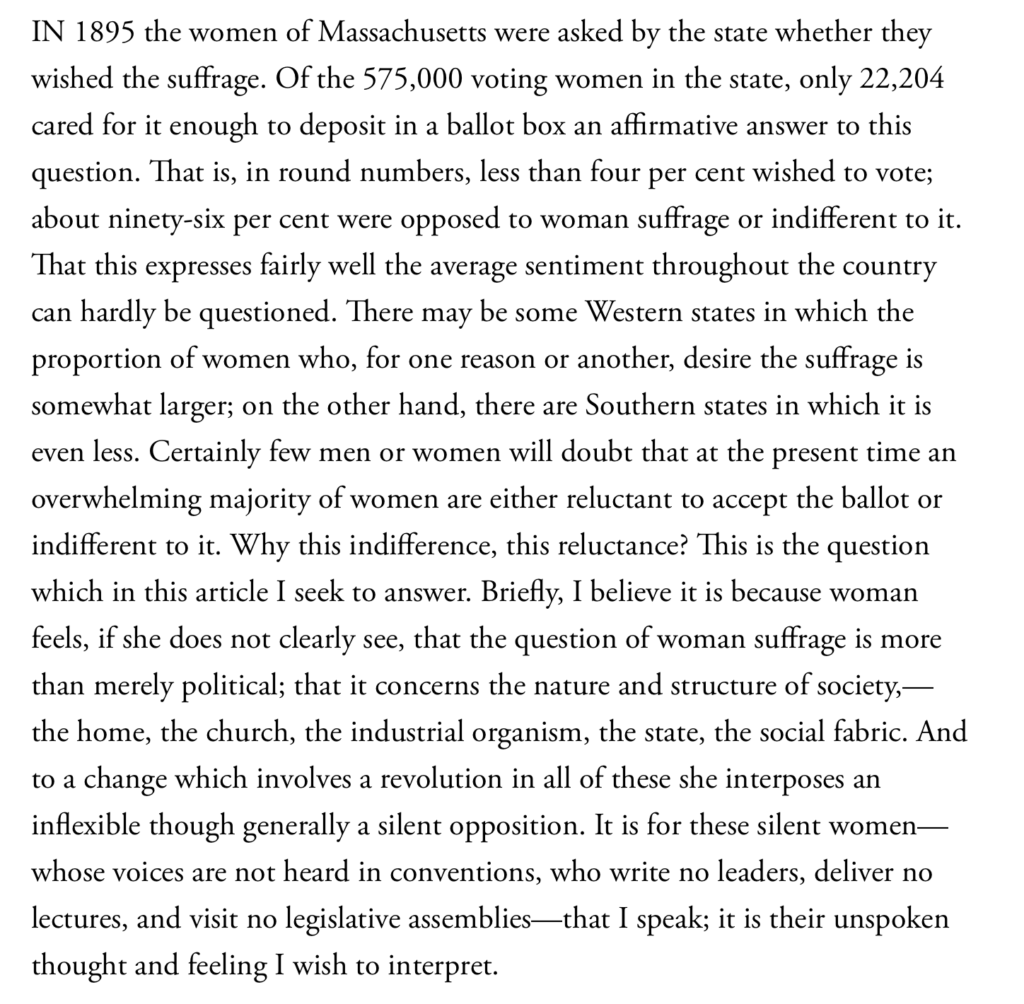
The State of Massachusetts, in 1895, surveyed women about whether they wanted to be able to vote. Here’s what happened:
Since Henry James brought up the topic of women becoming physicians, let’s take a look at that.
Women made up about 6% of physicians in the US in 1900 — a pretty high number, it seems to me. In Boston, it was 19% — in 1900.
Of course, most women, then as now, didn’t want to be physicians. They wanted to be mothers, and didn’t have time for this physician business. Those women that did become physicians, I would imagine, were those of a certain masculine cast, that didn’t get married in their 20s.
It turns out that women don’t want to be physicians today either. By six years after they complete their residency training, 40% of women have quit full-time work as physicians — compared to 100% of men surveyed. Of the women working full time, most of them were considering working part-time.
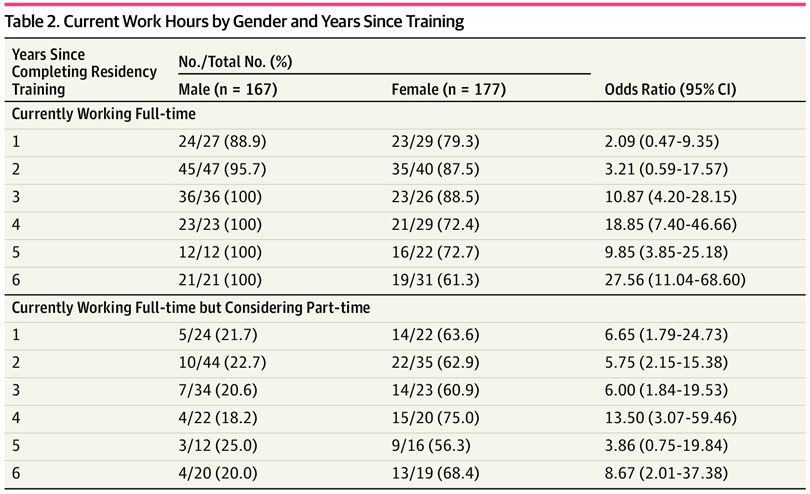
What, then, is even the point of training these women to be physicians? After four years of premed, four years of medical school, and 2-4 years of residency training, 40% of them quit after six years of actual labor.