
I am happy to find that Hudson Yards, the immense highrise development on the west side of Midtown Manhattan, has a Park. It has a name, and the name includes the word “park:” Bella Abzug Park.
February 28, 2016: Let’s Take a Look At Hudson, Yards, New York
Traditional City/Heroic Materialism Archive
They hired a Park Designer to design it: Michael Van Valkenburg Associates Inc.
I identified the need for a Park — not a vague area with vaguely park-like characteristics, but a Park, with a name that includes the word “park” — as an element that seemed to be lacking in the original plan.
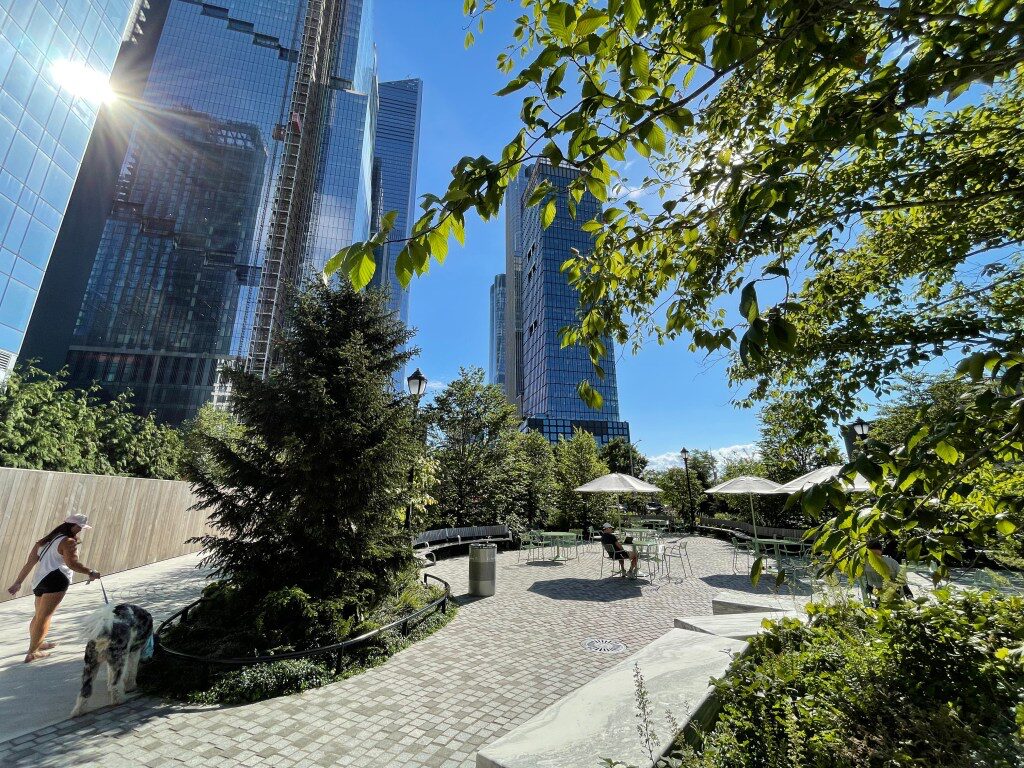
I don’t know if this had any effect on the outcome — the area was already designated “Hudson Park and Boulevard” — but the result is entirely successful. There are still a lot of “green space” areas in the Plan, and in real life, that are not-quite-parks. In this very-high-value land area, all the space should be either Parks and Squares, or Roadways or Building Footprint, ideally minimizing Roadways (although some are necessary), and maximizing Parks, Squares and Footprint. Literally every square foot should fall into one of those designations, and not some vague green space filler, or “urban parsley” as some have called it.
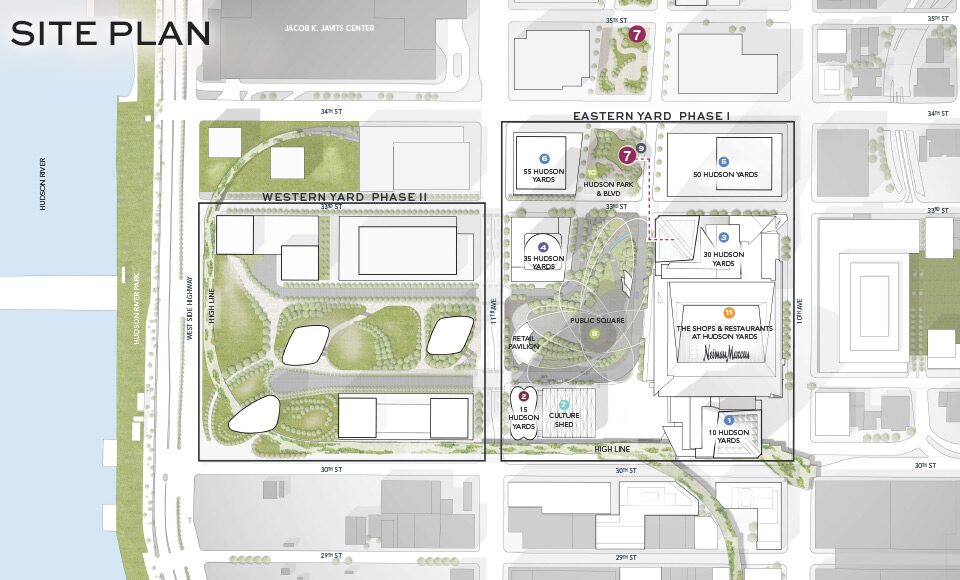
Lots of green here … but are they Parks?
Or, the World’s Most Expensive Urban Parsley?
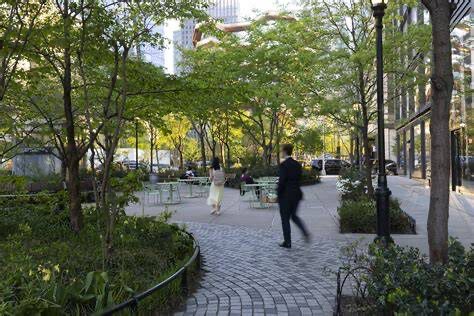
The result is very nice, and very comfortable and pleasant despite the 90-story highrises towering overhead, which you hardly even notice. The problem many have with the Corbusier Highrises and Roadways pattern, or what I call Twentieth Century Hypertrophism, is not really the highrises, but the roadways. It turns out that highrises and parks play quite well together. Go visit and find out.
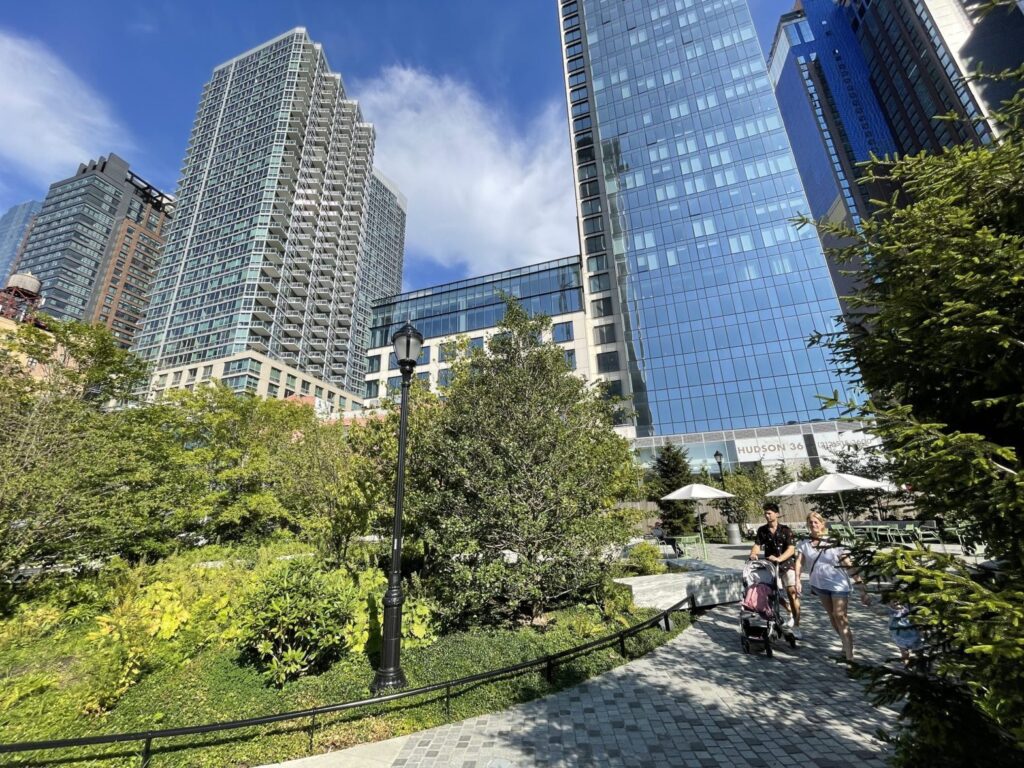
Yes, the typical 6-8 story Traditional City pattern of Europe is better for most cases — for example, most all of Brooklyn. But there are some places where mammoth FAR just makes economic sense, for example here, and other places where people just want to built towers because they are cool. So, if you are going to build towers anyway, go to Hudson Yards and find out what works in real life, and also, what doesn’t.